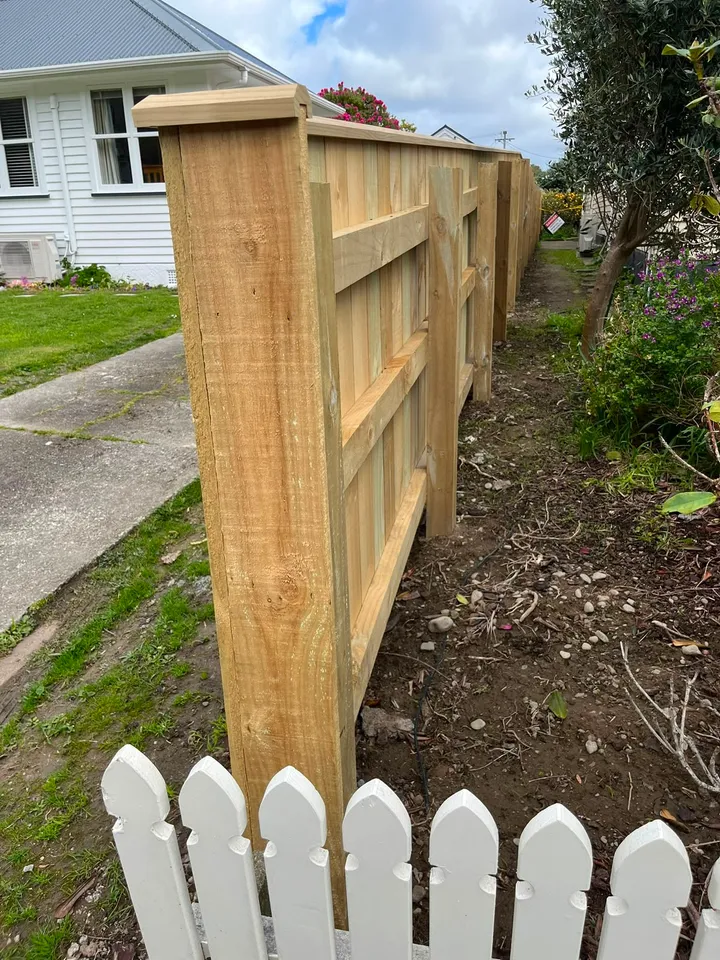
Wellington Post Replacement and Straightening
Most leaning fences don't need replacing — they need new posts. We dig out rotten or loose fence and gate posts, set new ones on proper footings, and pull the run back into a straight, plumb line, keeping as much of your existing fence as possible.
Post Replacement and Straightening in Wellington
Posts are the foundations of a fence. Everything else — rails, palings, panels and gates — hangs off them, so when a post rots or works loose, the whole section starts to lean. In Wellington's wet winters and clay soils, the most common failure point is right at ground level, where timber stays damp and air can't dry it out. As specialist fence builders in Wellington, we treat posts as a job in their own right rather than an afterthought.
In many cases we can take out the failed posts, install new ones on solid concrete footings, and refix the existing rails and cladding to them. That gets the fence standing straight again for a fraction of the cost of a full rebuild. Where a fence has only tipped slightly and the posts are still sound, straightening and bracing may be all it needs.
Tell us about your project
Free, no-obligation quote.
Post Replacement and Straightening Services in Wellington
Finding the Cause of Lean
Leaning posts are usually caused by rot, loose footings, wind load or ground movement, so we investigate the cause first, ensuring we fix the real problem and prevent it returning. Finding the cause means the fix lasts instead of failing.
Replacing Rotten Posts
Posts rot at ground level, so we remove failed posts, prepare solid footings and install correctly treated replacements, restoring the strength and stability of your fence without always needing to rebuild every panel. Proper replacement gives your fence strong foundations.
Straightening and Re-Bracing
Where posts are sound but leaning, we can reset, brace and secure them, bringing your fence back into line and giving it extra support against Wellington's strong winds. Properly reset posts restore straight lines and avoid replacing the entire fence.
Stronger Footings
Concrete footings sized to the post, fence height and soil conditions give long-term stability, so we dig to appropriate depths and use quality materials, particularly on slopes and in exposed locations. Properly sized footings keep fences upright and stable longer.
Protecting Your Existing Fence
We work carefully around existing panels, rails and gates, minimising damage and keeping costs sensible, while making sure the repaired section aligns neatly with the rest of your fence. That careful approach keeps repair costs down and protects sound sections.
Preventing Future Problems
We advise on drainage, post spacing and material choices that reduce rot and movement, helping you avoid repeat repairs and keep your fence upright and secure for the long term. That advice helps your repairs last and keeps fences secure.
How to Tell Your Posts Are Failing
Post problems are easy to miss until the fence is visibly leaning. A quick walk along the line can reveal trouble early. Look out for:
- A fence that leans or bows along the run
- Posts that move when you push them
- Soft, dark or crumbling timber at ground level
- Cracked or lifted concrete around the base
- Gates that drag, drop or won't latch
- Rails pulling away from the posts
A screwdriver pushed into the post just below the soil line is a simple test: if it sinks in easily, the post is likely rotten where it matters most.
Replace, Brace or Straighten?
The right fix depends on why the fence is leaning. We diagnose the cause first, then choose the approach that will actually hold.
Full Post Replacement
For posts rotted or snapped at ground level. We remove the old post and footing, set a new post in fresh concrete and reattach the rails.
Re-Setting Loose Posts
For sound posts in footings that have failed or loosened. We dig out, re-plumb and re-concrete the post in a deeper, wider hole.
Straightening and Bracing
For runs that have tipped but have solid posts. We pull the line back to plumb and add bracing so it stays there.
Gate Post Rebuilds
Gate posts carry a lot of leverage. We fit heavier posts and larger footings so gates swing and latch properly again.
Intermediate Posts
Where spans are too long and rails sag between posts, we can add extra posts to support the run.
Metal Post Replacement
Rusted or bent steel and aluminium posts can be cut out and replaced, with new posts finished to suit the fence.
Building Posts That Last Longer
New posts are only as good as the way they're installed. A post set the same way as the one that failed will likely fail the same way. Our post work focuses on:
- Timber treated to the right level for in-ground use
- Holes dug to a depth that suits the fence height and wind exposure
- Concrete shaped to shed water away from the post
- Gravel at the base to help drainage where suitable
- Post sizes matched to the load, especially at gates and corners
- Checking plumb and line before the concrete sets
Why Posts Fail on Wellington Sections
Local conditions are hard on fence posts. Understanding why a post failed helps us make sure the new one doesn't follow it.
Wet Clay Soils
Heavy clay holds water against the timber and swells and shrinks with the seasons, loosening footings over time.
Wind Loading
Solid fences on exposed sites put huge leverage on each post, especially in strong northerlies and southerlies.
Sloping Ground
On hillsides, soil creep and water run-off push posts downhill, and posts near the edge of a bank can lose support.
If the lean is caused by soil moving behind a fence on a bank, the real fix may be a retaining structure. Our retaining wall fencing service covers that kind of site.
Gate Post Problems
A sagging or dragging gate is very often a post problem, not a gate problem. The gate's weight acts like a lever on the hinge post, and a footing that's too small slowly gives way. We can replace or re-set the post and re-hang the gate so it closes cleanly. If the gate itself is past it, we also build new pedestrian gates to suit your fence.
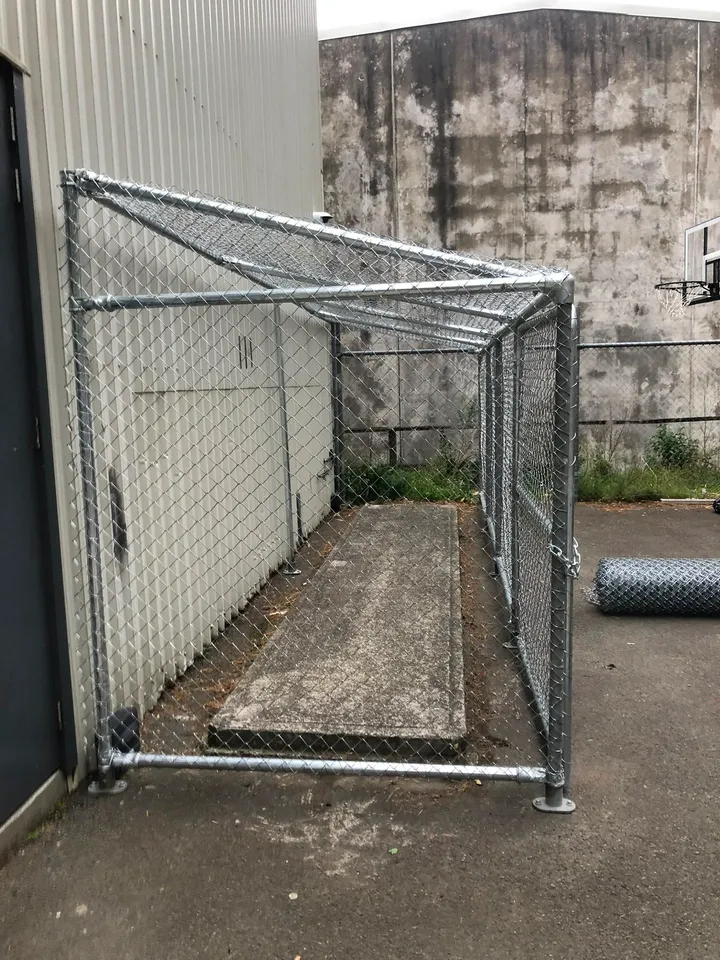
Why Choose Our Fence Post Replacement and Straightening Contractors in Wellington
A leaning fence is usually a post problem, and our contractors find the real cause before fixing it. We investigate rot, loose footings, wind load and ground movement, then replace failed posts, reset sound ones and add bracing where it helps. Footings are sized for your post, fence height and soil conditions, which matters on Wellington slopes and exposed sites. We work carefully around existing panels, rails and gates to keep costs sensible and your fence neat. Honest advice on drainage, spacing and materials helps prevent repeat repairs, so your fence stays upright, secure and dependable for the long term.
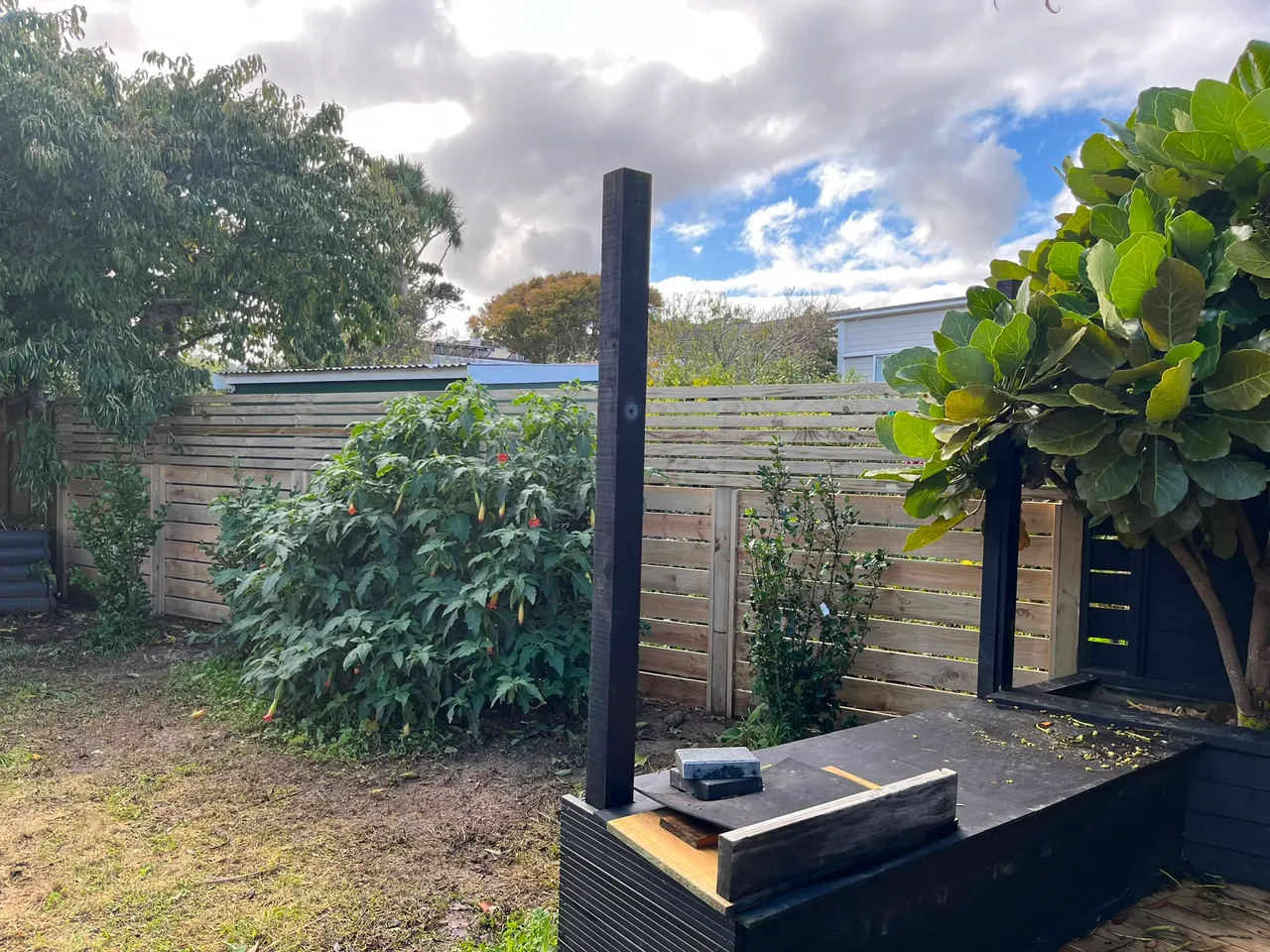
Fence Post Replacement Contractors in Wellington: How We Work
1. Diagnose the Lean
We test each post, check footings and soil, and work out whether the problem is rot, loose footings, ground movement or design.
2. Support and Remove
The fence is propped while failed posts and old concrete are dug out, keeping rails and cladding intact wherever possible.
3. Set, Straighten, Refix
New posts are set and braced while the concrete cures, then the fence is refixed in a straight, plumb line.
Selected Local Work
Wellington Fencing Projects
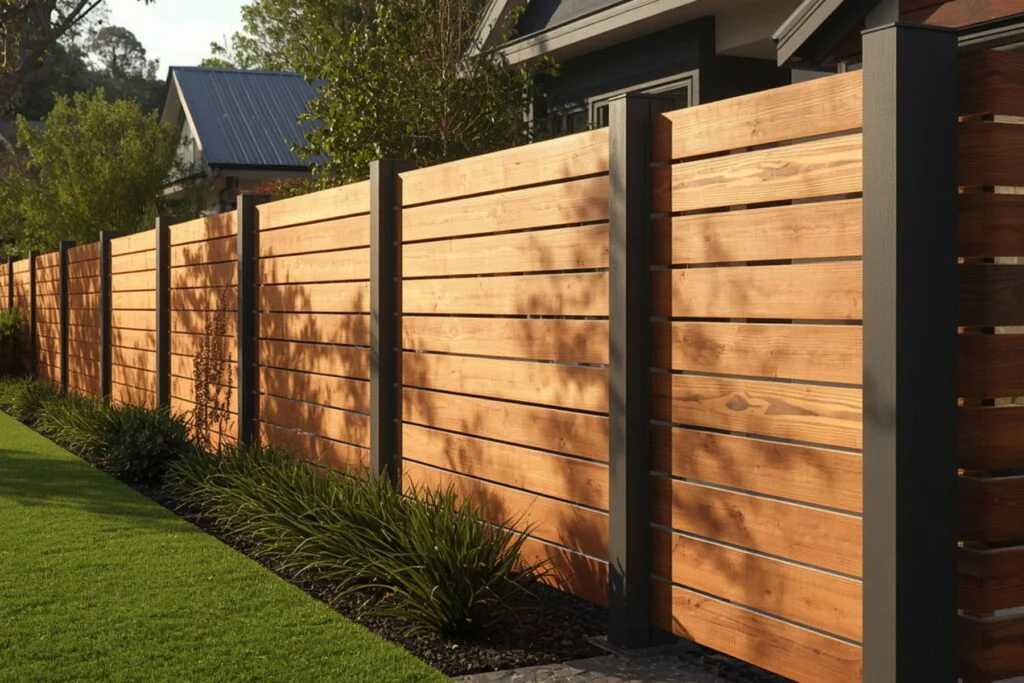
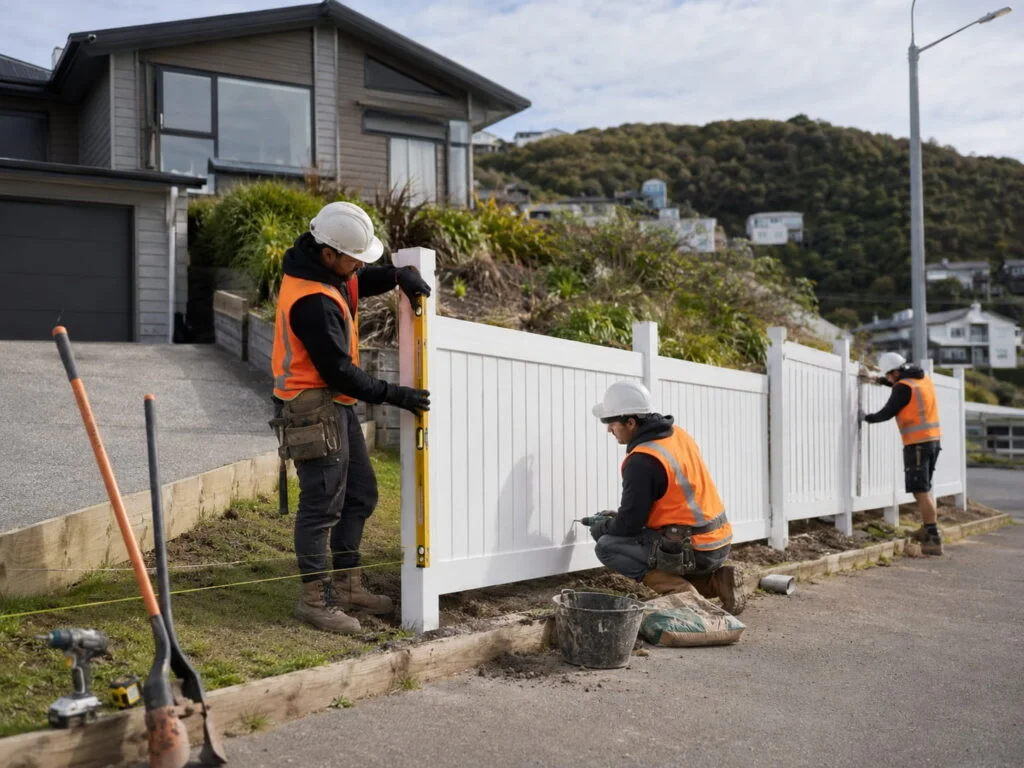
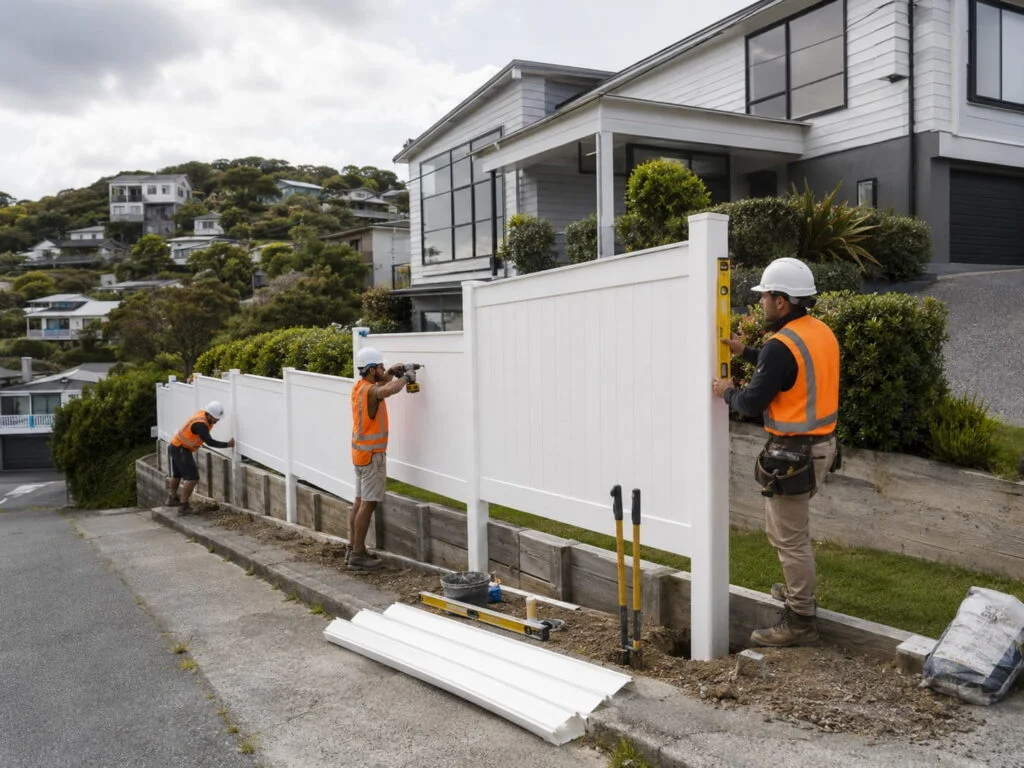
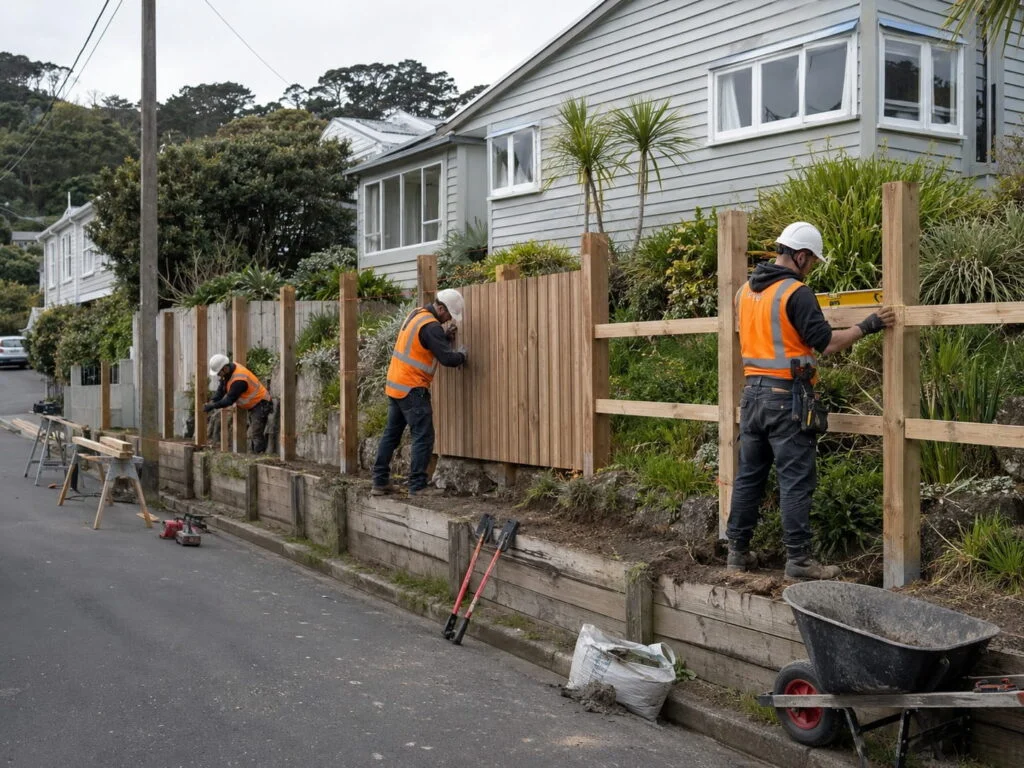
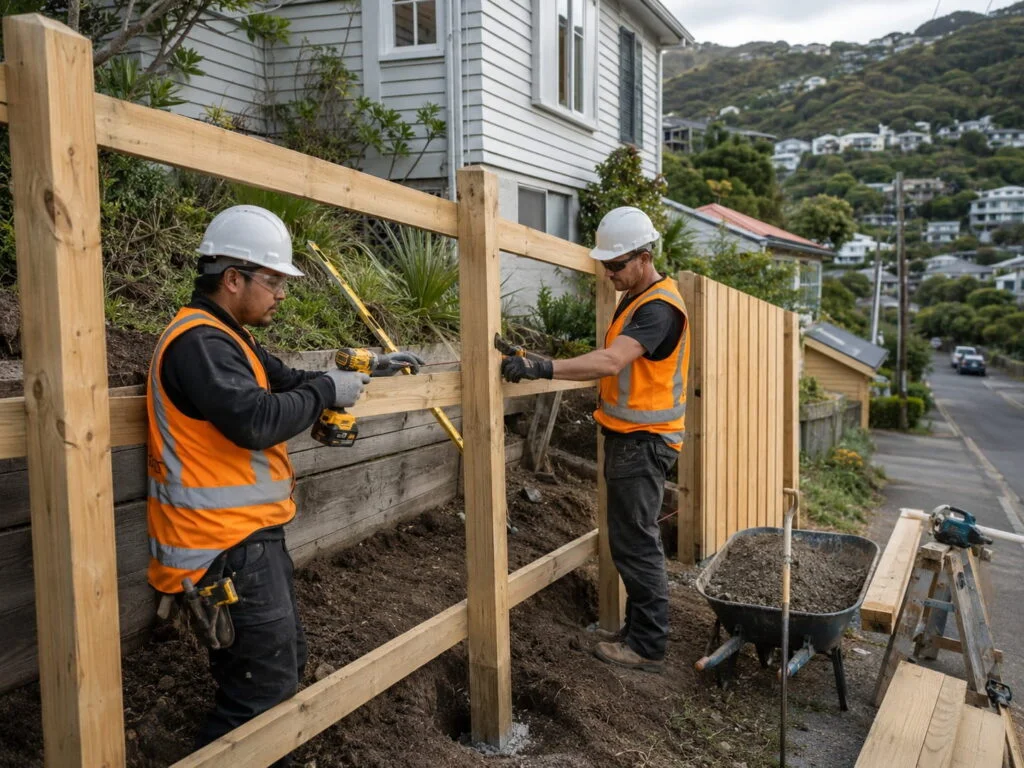
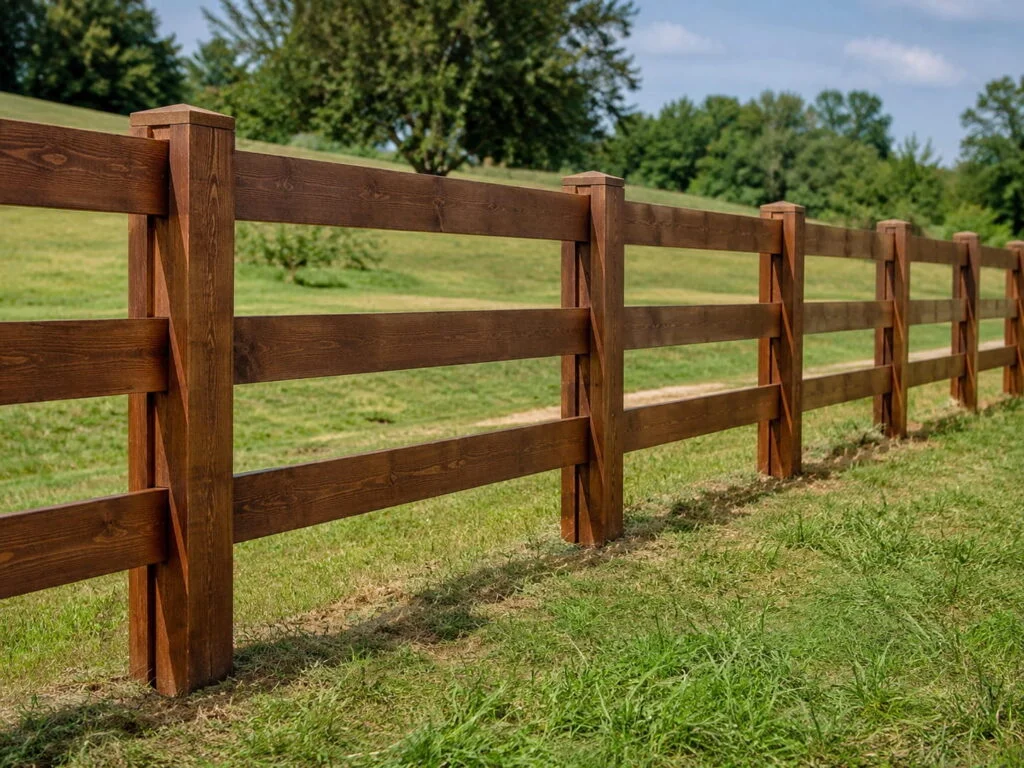
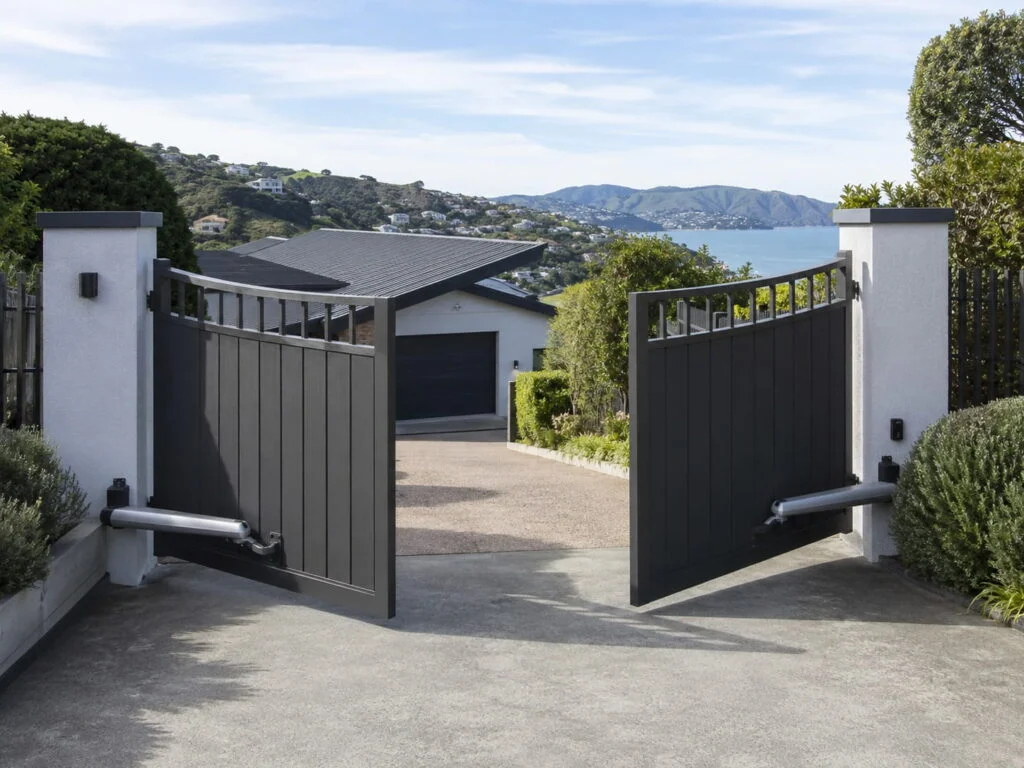
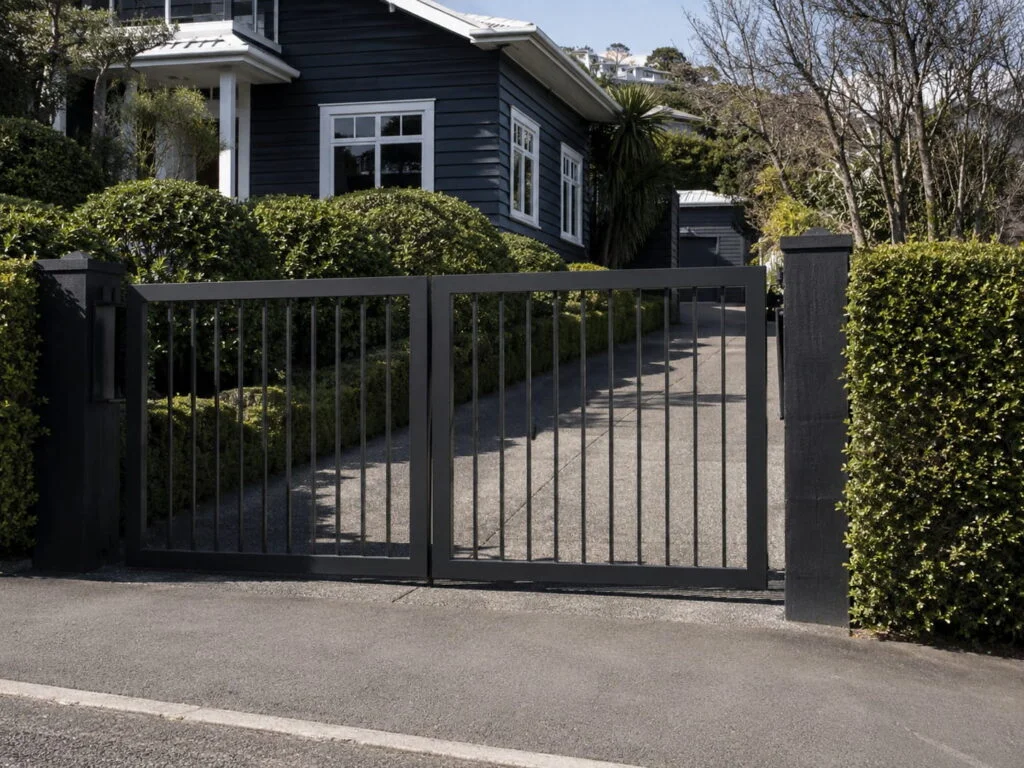
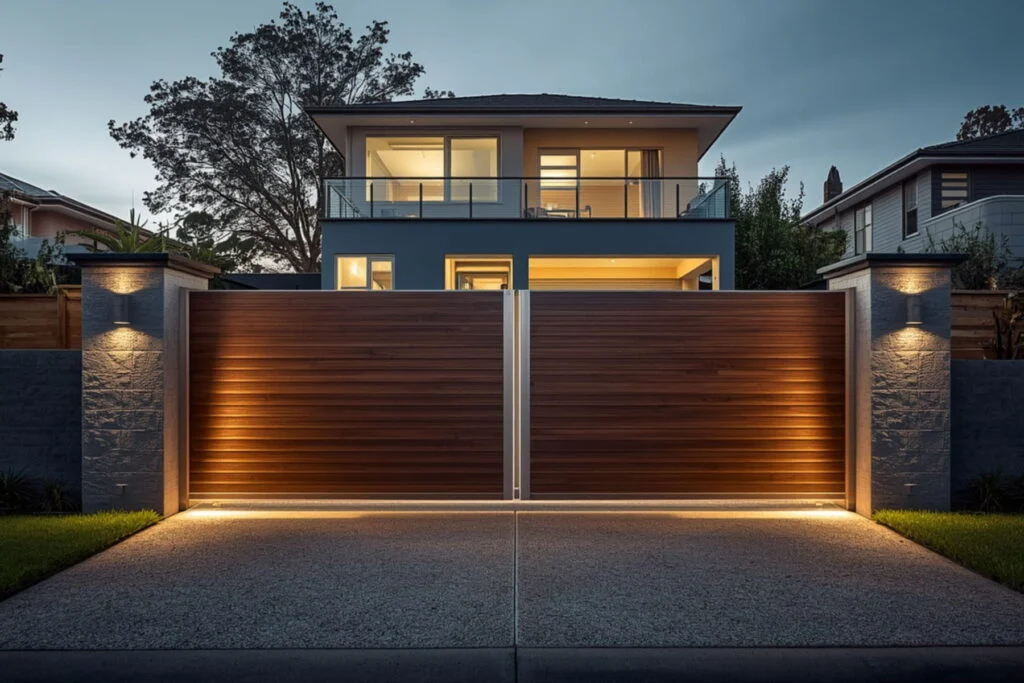
Explore our featured fencing projects across Wellington, showcasing quality workmanship, durable materials, and custom designs tailored to each property. From modern privacy fencing to secure boundary solutions, see why homeowners trust our experienced team for reliable fencing results.
Post Replacement and Straightening FAQs
Usually, yes. We support the fence, remove the failed post and footing, set a new post, and reattach the existing rails and palings. Only the sections around the post are disturbed.
Sometimes. If the posts are sound and the footings have only shifted slightly, straightening and bracing can work. If the posts are rotten at ground level, pushing them back will only last until the next strong wind, so they need replacing.
We test each post along the affected run. If only a few have failed, we replace those. If most are rotten, a full replacement of the fence may make more sense, and we'll tell you honestly which is better value.
The most common cause is a hinge post that is moving in its footing or rotting at the base. Re-setting or replacing that post with a larger footing usually solves it.
Fence Starting to Lean?
Get a free, no-obligation quote from Wellington's trusted fencing team.