Farm Fencing Wellington: A Complete Guide for Rural Properties
Whether you're running a few sheep on a lifestyle block or managing a working farm, good fencing is the backbone of the operation. At Fencing Wellington we build rural fencing across the wider region, and this guide pulls together the essentials: the fence types, how stock and terrain shape the design, rough costs, and how to plan a project that lasts.
Rural fencing is a long-term investment. Done well, a farm fence quietly does its job for 25 to 40 years. Done poorly, it becomes a constant maintenance headache. Here's what goes into getting it right.
Tell us about your project
Free, no-obligation quote.
Match the Fence to the Stock
The single biggest factor in a farm fence is what it needs to contain. Sheep, cattle, horses, and deer all place different demands on a fence in terms of height, wire spacing, and strength. A fence built for sheep won't reliably hold cattle, and deer need something taller again.
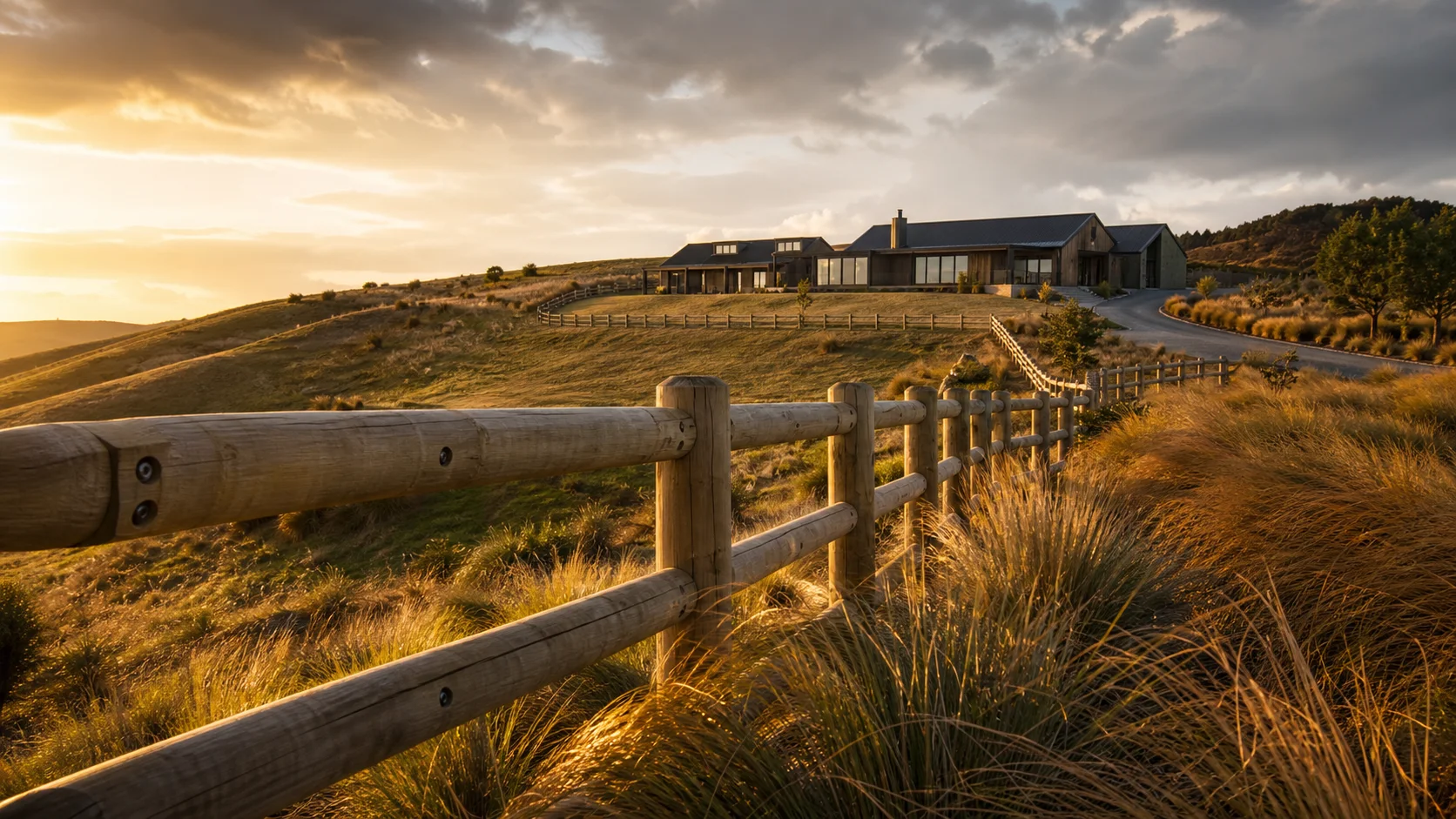
Terrain is the next consideration. Wellington's rural land is rarely flat, and hill country, gullies, and wet ground all affect how a fence is built and strained. A good rural fencer reads the contours and adjusts post spacing, straining, and anchoring so the line stays tight and strong across the whole run. Getting the spec right from the start avoids costly rework later.
Farm Fence Types and Costs
Indicative guide only. Actual costs depend on terrain, access, materials, and the length of the run, so always get a site-specific quote.
| Fence type | Best for | Indicative cost per metre |
|---|---|---|
| Post and wire (7-8 wire) | Sheep and cattle boundaries | $25 - $45 |
| Post and netting | Sheep, lambs, mixed stock | $30 - $55 |
| Post and rail | Horses and stud blocks | $75 - $180 |
| Deer fencing (high-tensile) | Deer and specialist stock | $35 - $70 |
| Electric (permanent) | Grazing management | $15 - $30 |
What Makes a Farm Fence Last
The difference between a fence that lasts decades and one that sags in a few seasons comes down to a handful of fundamentals.
Solid Strainers
Well-anchored strainer and angle posts hold the tension that keeps the whole line tight.
Quality Materials
Correctly treated posts and high-tensile wire resist rot, rust, and grazing pressure.
Right Spacing
Post and wire spacing matched to your stock and terrain keeps animals where they belong.
Plan Before You Build
A little planning saves money and headaches. Think about how you'll subdivide paddocks, where gates and laneways need to go for easy stock movement, and how the fencing ties into your grazing plan. It's also the moment to confirm boundaries and check whether any run sits near a road or public land.
Your planning checklist:
- Confirm what stock each paddock will hold
- Map gates and laneways for stock flow
- Check boundaries and any roadside runs
- Choose materials for a 25-40 year life
- Plan water and access alongside fencing
- Get a clear, site-specific quote
Ready to plan your project? See our farm fencing services or get in touch for a free on-site quote.
Fencing a Rural Block?
We build rugged, long-lasting farm fencing. Talk to Wellington's trusted fencing team.